
WELCOME BONUS 300%
UP TO €2000 + 100
FREE SPINS
UP TO €2000 + 100
FREE SPINS
Home → Blackjack
Blackjack at Lucky Block Casino: Variants, Rules and Payouts
Side Bets don't count towards bonus turnover
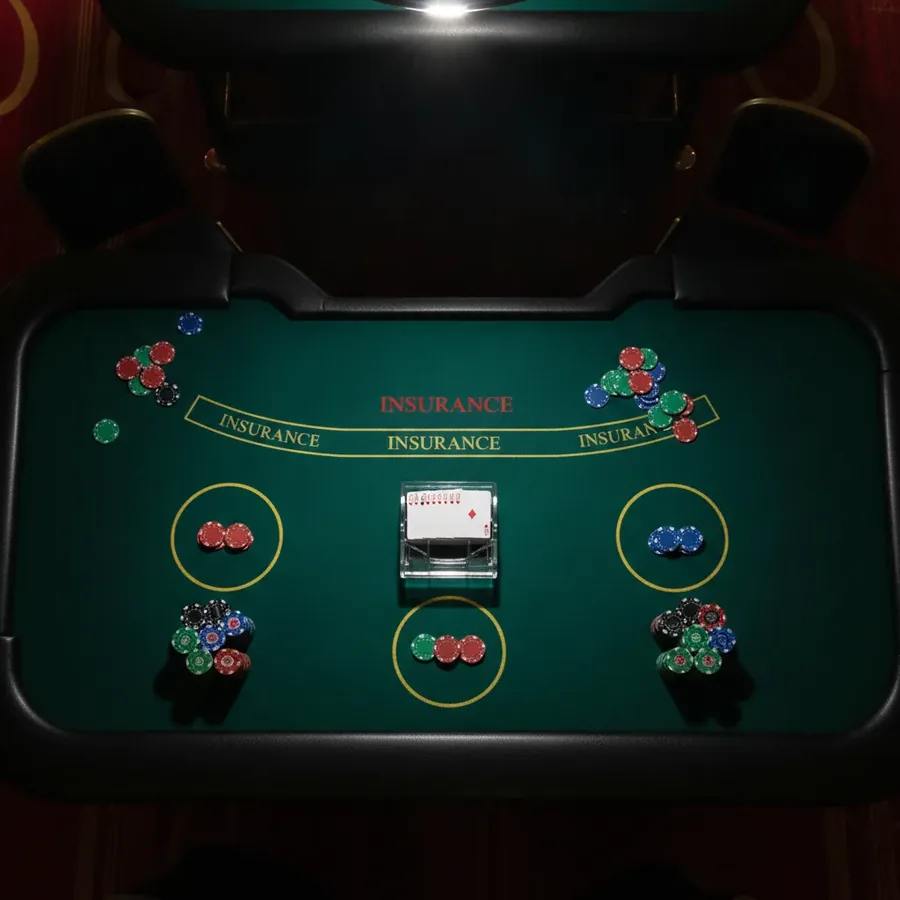
Insurance Pays 2:1 Yet Still Costs Money, a side bet available when the dealer shows an Ace, carries a steep house edge of 7.47 percent compared to the main game's lower rates. This separate wager reduces the overall return to player significantly because it is excluded from bonus conversion rules entirely. Players attempting to use this specific insurance mechanism will find that the cost outweighs any potential short-term gain against the house advantage.
The primary welcome offer provides a 300 percent match up to 2,000 EUR plus 100 free spins for new registrants. However, table games contribute only 10 percent toward the required wagering turnover, meaning every euro spent on blackjack counts as merely ten cents toward clearing the bonus. This structural difference forces players to rely heavily on slot contributions rather than table games to meet the financial requirements efficiently.
Blackjack Party by Evolution allows bets between 1.00 and 1,000 EUR but offers no contribution benefit for the main wager under standard terms. Since side bets like insurance are explicitly excluded, the effective return on investment for those specific wagers drops further below the base RTP of 99.56 percent. Consequently, utilizing these high-limit tables for bonus clearance becomes mathematically inefficient due to the low percentage credit applied to the balance.
Which table limits suit 20 EUR balance?
Lightning Blackjack by Evolution accepts minimum bets of 1 EUR, allowing a 20 EUR bankroll to sustain twenty initial hands before ruin if losses occur. The maximum limit reaches 2,500 EUR, providing ample room for progression strategies without hitting table caps during early gameplay phases. This wide range supports both conservative flat betting and more aggressive doubling systems within the constraints of a small starting deposit.
Quantum Blackjack Plus Live operates with identical entry barriers at 1 EUR minimum stakes, matching the accessibility of other popular live dealer options. Its upper limit extends to 5,000 EUR, accommodating high rollers who might otherwise be restricted by lower-cap tables found elsewhere in the lobby. The flexibility in stake sizing ensures that players with modest funds can still access premium production values without immediate financial pressure.
Standard RNG variants often require higher minimums or lack the interactive features of live streams, potentially limiting engagement for those with tight budgets. While some digital versions may allow sub-euro bets, the live tables consistently offer a 1 EUR floor which aligns perfectly with a 20 EUR reserve. This parity ensures that beginners can test strategies across different formats without exceeding their predetermined spending limits during initial sessions.
Register Late Surrender correctly in three steps
Late Surrender improves the player's expected value by reducing the house edge by approximately 0.08 percent compared to games without this rule option. This specific modification allows participants to forfeit half their bet after the dealer checks for blackjack, protecting against unfavorable starting hands like twelve against a nine. Such tactical flexibility directly enhances long-term profitability by mitigating losses during statistically weak situations encountered frequently over thousands of rounds.
Blackjack Liberal Vegas Strip utilizes this surrender feature alongside other favorable rules like resplitting aces and doubling after splitting to achieve a remarkable 0.28 percent house edge. The combination of late surrender with these liberal parameters creates one of the most player-friendly environments available in modern online casino portfolios. This mathematical advantage stems from the cumulative effect of each rule change lowering the casino's statistical hold on total wagers placed.
Early Surrender, though rarely offered, provides an even greater benefit by improving RTP by up to 0.6 percent before the dealer checks for an ace. Since late surrender occurs only after this check, its value remains capped at 0.08 percent, making early surrender significantly more valuable when accessible. Most platforms restrict early surrender availability, forcing players to adapt their strategy around the less advantageous late surrender variant for optimal decision-making.
Insurance Pays 2:1 Yet Still Costs Money
Insurance wagers pay out at 2:1 odds when the dealer indeed holds a ten-value card underneath their exposed ace, offering immediate compensation for the main bet loss. Despite this attractive payout ratio, the underlying probability structure results in a substantial house edge of 7.47 percent for this specific side bet component. Mathematical analysis confirms that accepting insurance regularly erodes the bankroll faster than adhering to basic strategy recommendations which advise against taking it.
Basic strategy dictates that players should always decline insurance unless they are counting cards and the true count exceeds positive three in a six-deck shoe. This strict guideline exists because the independent nature of the insurance outcome means the expected value remains negative for average players lacking card tracking skills. Relying on intuition rather than statistical probability leads to consistent losses over time due to the inherent disadvantage built into the wager's design.
The main game typically maintains a much lower house edge, such as 0.46 percent in standard six-deck variations, compared to the punitive 7.47 percent on insurance. Accepting insurance effectively transfers risk from the main hand to a separate bet with inferior odds, thereby increasing the overall cost of play per hour. Avoiding this side bet preserves the integrity of the base game's theoretical return and prevents unnecessary depletion of funds during extended playing sessions.
RNG draws cards from virtual eight-deck shoe
Standard Blackjack 6 Decks variants utilize a six-deck shoe to determine card distribution, resulting in a house edge of 0.46 percent under standard rules. Using fewer decks generally lowers the house advantage, but six decks remain common due to their balance between operational efficiency and reasonable player odds. This configuration requires adherence to strict basic strategy to maintain the theoretical return rate of 99.54 percent over prolonged periods of play.
Some older or simpler implementations may simulate an eight-deck shoe, which increases the house edge by approximately 0.02 percent compared to six-deck games. This slight deterioration in odds arises because more cards dilute the impact of removing specific ranks, making card counting slightly less effective for skilled players. Consequently, opting for six-deck games whenever possible provides a marginally better environment for strategic decision-making and bankroll preservation.
Theoretical Return to Player percentages vary based on deck count, with single-deck games offering superior odds but often featuring restrictive rules like six-to-five payouts. An eight-deck setup without such penalties would theoretically yield a higher edge than six-deck equivalents, pushing the house advantage closer to 0.50 percent or above. Understanding these subtle differences helps players select games that maximize their chances while minimizing the statistical erosion caused by additional deck layers.
Blackjack variants at a glance
| Variant | Payout | House edge | Rule | Bet range |
|---|---|---|---|---|
| Blackjack Insurance / Versicherung (6–8 Decks) | 92.53% | 7.47% | Separate Nebenwette bis 50% der Hauptwette, wenn der Dealer ein Ass hat. Basisstrategie schreibt IMMER Ablehnung vor (außer Karten zählen bei True Count ≥ +3). Bei einem Deck Vorteil ≈ 5.88% | Insurance 2:1 |
| Blackjack Auszahlung 6:5 statt 3:2 (6 Decks) | 98.15% | 1.85% | Ersatz von 3:2 durch 6:5 fügt exakt +1.39 Prozentpunkte zum Vorteil des Casinos hinzu – stärker als jede andere Regeländerung. Bei $10 Einsatz zahlt Blackjack $12 statt $15. | Blackjack 6:5, Gewinn 1:1 |
| Blackjack Liberal Vegas Strip (liberale Regeln, 3:2) | 99.72% | 0.28% | Günstigste Regelkombination: S17 + DAS + Resplit + Late Surrender. Standardabweichung 1,15 | Blackjack 3:2, Gewinn 1:1 |
| Blackjack Surrender (Late Surrender) – Regel-Effekt | n.a. (Regel-Modifikator) | −0.08 Prozentpunkte | Spieler gibt Hand nach Dealer-Blackjack-Prüfung auf, verliert die Hälfte des Einsatzes. Verbessert RTP um ca. 0.08 Prozentpunkte. Early Surrender ist wesentlich wertvoller (bis −0.6 Prozentpunkte), aber extrem selten. | Rückzahlung 50% des Einsatzes |
| Blackjack Ein Deck, klassische Regeln, 3:2 | 99.85% | 0.15% | Weniger Decks = niedrigerer Vorteil; ein Deck gibt ca. −0.48 Prozentpunkte gegenüber 8 Decks. Oft durch 6:5 Auszahlung kompensiert. | Blackjack 3:2, Gewinn 1:1 |
| Blackjack Split / Double / H17 – Regel-Effekte | n.a. (Regel-Modifikatoren) | H17 +0.22 Prozentpunkte; RSA −0.08 Prozentpunkte; DAS −0.14 Prozentpunkte | Dealer Hits Soft 17 verschlechtert RTP um 0.22 Prozentpunkte; Resplit Aces verbessert um 0.08 Prozentpunkte; Double After Split verbessert um ca. 0.14 Prozentpunkte; 6 Decks statt 8 – ca. 0.02 Prozentpunkte. | Double – Einsatz ×2 mit einer Karte; Split – bis 4 Hände; Ass-Split meist mit einer Karte. |
How long does a Live Blackjack round take?
Lightning Blackjack operates with a distinct speed profile where players face unlimited participants and receive Lightning Multiplikatoren bis 25x auf gewonnene Hand during the active betting phase. This structure allows for rapid hand resolution compared to standard tables, as the dealer deals quickly to accommodate the high volume of concurrent bets without prolonged pauses between rounds. The RTP 99.56% % applies to this fast-paced environment, meaning every second counts toward the theoretical return over hundreds of thousands of spins rather than short-term session outcomes.
Quantum Blackjack Plus Live introduces Quantum-Multiplikatoren bis 1.000x auf 3 Karten-Kombis (21 Punkte) which requires slightly more time for card distribution and multiplier assignment before the final payout calculation occurs. The Einsatz 1 - 5.000 EUR range supports this complexity, allowing high rollers to capitalize on the extended deal sequence while maintaining the game's integrity through Playtech's secure streaming technology. This additional processing time ensures that the RTP 99.57% (bei optimaler Strategie) % remains accurate despite the visual effects added by the quantum multipliers.
Blackjack Party features a Partystimmung mit zwei Moderatoren who engage with the audience between hands, creating a social atmosphere that naturally extends the total duration of each round beyond pure gameplay mechanics. The Einsatz 1,00 - 1.000 EUR limits are manageable within this slower pace, giving beginners ample time to observe dealer behavior and apply basic strategy without feeling rushed by the clock. This leisurely approach contrasts sharply with the instant resolution of digital variants, offering a more immersive but time-intensive experience for those preferring live interaction.
Splitting costs double bet: plan budget
The rule DAS −0.14 Prozentpunkte improves the overall RTP by allowing players to Double After Split, which effectively doubles the initial wager on newly created hands when favorable cards appear. This flexibility is crucial for bankroll management, as it permits strategic escalation only in high-probability situations, thereby reducing the risk of losing the entire stake on a single poor decision during the hand. Players must ensure they have sufficient funds to cover these doubled bets if they choose to exercise this specific option during play.
Resplit Aces improves the RTP by approximately 0.08 Prozentpunkte, enabling players to split Ace pairs multiple times if additional Aces are dealt, though most casinos limit this to one card per new hand. This rule significantly impacts budget planning because each split requires placing an additional bet equal to the original stake, potentially quadrupling the exposure if multiple splits occur consecutively during a single round. Beginners should monitor their chip count closely to avoid exceeding their predetermined loss limits when utilizing this advantageous feature.
H17 +0.22 Prozentpunkte represents a disadvantageous rule where the Dealer Hits Soft 17, increasing the house edge and requiring players to adjust their splitting strategy to mitigate potential losses. Since doubling after split is permitted under liberal conditions, players can offset some of this increased cost by aggressively doubling down on strong two-card totals formed after splitting non-Ace pairs. This mathematical reality demands careful budget allocation, as the higher house edge erodes profits faster than in games offering Soft 17 standing rules.
What Hole Card Means at a Live Table
In European-style blackjack, the dealer receives only one face-up card initially, keeping the second card face-down until all players complete their actions, which fundamentally alters risk assessment compared to American versions. This absence of immediate hole card information forces players to rely strictly on basic strategy charts that account for the unknown dealer value, reducing the impact of early surrender options that depend on knowing the dealer's hidden card. The resulting uncertainty increases variance, requiring players to manage their bankroll more conservatively to withstand longer dry spells without significant wins.
American blackjack typically reveals the dealer's hole card immediately after the initial deal if the upcard is an Ace or Ten-value card, allowing for instant decisions regarding Insurance / Versicherung bets. This transparency enables players to calculate exact probabilities for winning hands, such as recognizing when the dealer likely has a strong twenty-one and choosing to surrender or take insurance strategically. The separate Nebenwette bis 50% der Hauptwette becomes viable here, though the Hausvorteil 7.47% makes it generally unprofitable for those not counting cards effectively in real-time.
Live tables often use continuous shuffling machines or automatic dealing shoes that obscure the hole card concept entirely by dealing sequentially without revealing any card until the player acts. This mechanical process eliminates traditional hole card dynamics, forcing reliance on the visible upcard alone for all strategic decisions throughout the round. The Einsatz 1,00 - 1.000 EUR range remains unaffected by this procedural change, but players must adapt their mental models to function without the predictive advantage of seeing the dealer's hidden value.
Which hands are excluded from Surrender?
Late Surrender allows players to forfeit half their bet only after the dealer checks for blackjack, meaning hands are excluded if the dealer holds an Ace or Ten-value card showing initially. This exclusion protects the casino from players abandoning potentially winning hands too early, ensuring that the Spieler gibt Hand nach Dealer-Blackjack-Prüfung auf condition applies only when the dealer cannot instantly win with a natural twenty-one. The Rückzahlung 50% des Einsatzes provides a safety net for weak starting totals like sixteen against a dealer nine, but only if the dealer's hole card does not complete a blackjack.
Early Surrender is much rarer and valuable, improving RTP by up to −0.6 Prozentpunkte by allowing players to quit before the dealer checks for blackjack, regardless of the upcard. This aggressive option excludes no hands based on dealer visibility, making it superior to late surrender in terms of expected value, though its extreme rarity means most beginners will never encounter it. When available, it offers unparalleled protection against strong dealer upcards, allowing players to cut losses immediately without waiting for further card distribution or dealer verification steps.
Hands totaling seventeen or higher are inherently excluded from surrender options because the statistical probability of winning or pushing exceeds the guaranteed loss of fifty percent from surrendering. Basic strategy dictates holding these strong hands against any dealer upcard, rendering the surrender mechanic irrelevant for anything above sixteen. This exclusion reinforces the importance of mastering hard totals, as players who attempt to surrender nineteen or twenty would statistically lose more money over time than those who simply stand pat.
Bust at 22: Stake Lost Immediately
A bust occurs when a player's hand exceeds twenty-one points, resulting in an immediate loss of the entire stake regardless of the dealer's final hand or potential bust. This rule applies universally across all blackjack variants, including those with liberal rulesets like Liberal Vegas Strip, where even the lowest Hausvorteil 0.28% cannot override the fundamental principle that exceeding the limit terminates the round. Players must carefully track their running total, especially when hitting on soft hands, to avoid accidentally crossing into the bust territory due to miscounting card values.
Insurance / Versicherung payouts operate independently of the bust rule, paying 2:1 if the dealer has blackjack, but this side bet loses immediately if the dealer does not achieve twenty-one, regardless of whether the player busts. The separate Nebenwette bis 50% der Hauptwette creates a parallel outcome path, meaning a player can bust their main hand yet still recover some losses through a successful insurance claim if the dealer holds an Ace. This duality complicates budget planning, as both the primary bet and the insurance wager face simultaneous risk of total loss in different scenarios.
Multi-deck games using 6–8 Decks increase the likelihood of drawing cards that push totals into the bust range, as the higher deck penetration reduces the predictability of remaining card values. The Hausvorteil 7.47% associated with taking insurance reflects this increased variance, encouraging players to avoid the side bet unless they possess advanced card-counting skills. Beginners should focus on strict adherence to basic strategy, which explicitly advises always rejecting insurance except in highly specific counting situations, thereby minimizing exposure to the immediate stake loss inherent in busting.
Continuous Shuffling Machine shuffles after each round
The Continuous Shuffling Machine eliminates manual intervention by resetting the deck composition after every single hand dealt at the table. This mechanical process ensures that the House Edge remains constant at 0.46% for standard six-deck games, as card counting becomes mathematically impossible for any player attempting to track the shoe. Consequently, beginners relying on basic strategy face a predictable statistical disadvantage without the possibility of gaining an edge through observation or memory techniques during play.
Evolution provides the Lightning Blackjack variant which utilizes this technology alongside multipliers up to 25x on winning hands to create high variance outcomes. The RTP stands at 99.56% under optimal conditions, yet the continuous shuffle prevents players from predicting when favorable cards might appear in subsequent rounds. This feature demands strict adherence to basic strategy rather than intuitive betting patterns based on perceived streaks or previous hand results.
Playtech offers Quantum Blackjack Plus Live with similar automated reshuffling capabilities while introducing multipliers up to 1,000x on three-card combinations totaling 21 points. With an RTP of 99.57%, this game maintains mathematical integrity despite the added side bet volatility inherent in the quantum mechanics theme applied to the table. Beginners must recognize that these technological enhancements do not alter the fundamental house advantage derived from the underlying rules and payout structures.
Six Card Charlie Pays Immediately with Six Cards
A Six Card Charlie rule awards an automatic win if the player draws exactly six cards without exceeding twenty-one points in total value. This specific condition significantly improves the Player's expected return by reducing the House Edge below the standard 0.46% found in typical six-deck blackjack variants offered at major online platforms. Players utilizing this advantage should adjust their hitting strategies to prioritize reaching six cards when holding weak totals against dealer upcards.
Standard payouts for a natural blackjack remain fixed at 3:2, meaning a 100 EUR bet yields 150 EUR in winnings before any special rules apply. However, some tables offer 6:5 payouts which increase the House Edge to 1.85%, creating a massive disparity compared to the benefits provided by the Six Card Charlie provision. Beginners must verify the payout structure before sitting down to avoid losing potential profits due to unfavorable contract terms.
The distinction between early surrender and late surrender affects overall profitability, with late surrender returning fifty percent of the wager after the dealer checks for blackjack. While this rule reduces the House Edge by approximately 0.08 percentage points, it operates independently of the Six Card Charlie mechanic which triggers solely on card count. Understanding these separate modifiers allows players to calculate their true expected loss over thousands of hands played at live dealer tables.
Leveraging the Six Card Charlie opportunity requires patience and disciplined bankroll management since achieving six cards naturally takes more time per hand than standard three or four card hands. This slower pace can actually benefit beginners by allowing more time to consult basic strategy charts without feeling pressured by fast-moving dealers or other participants at the virtual table.
When can you increase your bet?
Increasing your wager is strictly permitted only after the conclusion of the previous round and prior to the placement of new chips for the upcoming deal. During the active dealing phase, no modifications to stake size are allowed once the initial two cards have been distributed to all participants at the table. This rigid timeline prevents confusion regarding which bet applies to which hand outcome and ensures fair execution of the game flow across all seats.
Evolution's Blackjack Party table allows bets ranging from 1.000 EUR down to minimum limits set by the specific lobby configuration for that particular session. Players wishing to escalate their exposure must wait until the moderator signals the start of the next round, typically accompanied by visual cues indicating open betting windows. Misjudging this timing results in rejected wagers that do not participate in the current hand regardless of the dealer's final card distribution.
Lightning Blackjack permits stakes between 1 EUR and 2,500 EUR, offering flexibility for both low rollers and high stakes players seeking larger multiplier opportunities. The ability to double down after splitting or hit soft seventeen does not grant permission to alter the original bet amount mid-hand under any circumstances. Adhering to these temporal constraints preserves the integrity of the game and prevents disputes over invalid transactions processed during restricted periods.
Quantum Blackjack Plus Live extends the upper betting limit to 5,000 EUR while maintaining the same procedural restrictions on when wagers can be adjusted or increased. Beginners should note that bonus contributions for table games generally account for only ten percent toward wagering requirements, making large bet increases less efficient for clearing promotional funds compared to slot play.
How much time is left for the decision?
Players typically receive thirty seconds to make their playing decisions including hits, stands, doubles, or splits once the initial cards are revealed on the digital interface. This timer resets for each individual action taken during the hand, ensuring that every choice receives dedicated attention from the software system processing the game logic. Failure to act within this window usually results in an automatic stand on hard totals or an automatic hit on soft totals depending on preset default rules.
The duration required to complete a full hand varies significantly between different variants, with Evolution's Lightning Blackjack potentially extending rounds due to the lightning multiplier animations. These visual effects occur after the player has made their strategic choices but before the dealer reveals their hole card, adding latency to the overall gameplay cycle.
Playtech's Quantum Blackjack Plus Live introduces additional complexity through its quantum multiplier features which activate on specific three-card combinations totaling twenty-one points. The decision timeframe remains consistent at thirty seconds per action, but the psychological pressure of chasing these rare high-value outcomes may influence impulsive play among inexperienced users. Recognizing the fixed time allocation helps maintain discipline and prevents rushed errors that could cost valuable chips unnecessarily.
Insurance bets present a unique timing challenge requiring immediate decision-making before the dealer checks for blackjack when showing an ace upcard. Since insurance pays 2:1 but carries a house edge of 7.47%, accepting this side bet statistically guarantees long-term losses unless the player possesses advanced card counting skills. Most automated systems enforce a strict cutoff point after which no further insurance options are available regardless of remaining time on the clock.
Shoe, Cut Card, and 75 Percent Penetration
The shoe contains six to eight decks of cards shuffled together, with a cut card placed at approximately seventy-five percent penetration depth from the top of the stack. This positioning determines when the current round will be the last one before the cards are collected and freshly shuffled by the machine or dealer. For beginners, understanding penetration depth clarifies why certain games end abruptly without warning signs visible earlier in the hand sequence.
Standard deviation values around 1.15 indicate moderate volatility in Liberal Vegas Strip games featuring sixteen rules like soft seventeen standing and resplitting aces. Higher penetration rates allow card counters to gain marginal advantages, though continuous shuffling machines negate this benefit entirely by randomizing the deck after every single hand dealt. Players relying on basic strategy face identical odds regardless of how deep into the shoe they play during any given session.
The cut card mechanism ensures that the casino maintains control over the frequency of shuffles, balancing operational efficiency with fairness for all participants at the virtual table. A seven-five percent penetration rate means roughly three-quarters of the total cards are dealt before reshuffling occurs in traditional non-automated environments. This metric serves as a key indicator for experienced gamblers evaluating the theoretical sustainability of various blackjack variants offered by different providers.
Bonus terms often restrict playable games based on contribution percentages, with table games contributing only ten percent toward wagering requirements compared to one hundred percent for slots. Consequently, spending hours analyzing penetration depths or tracking shoe compositions yields minimal financial return unless the player intends to clear bonuses through high-volume slot play instead. Recognizing this limitation helps manage expectations regarding the utility of detailed game analysis for promotional fund clearance.
Contact
Live - online chat
Banking









Providers












Lucky Block Casino 2026